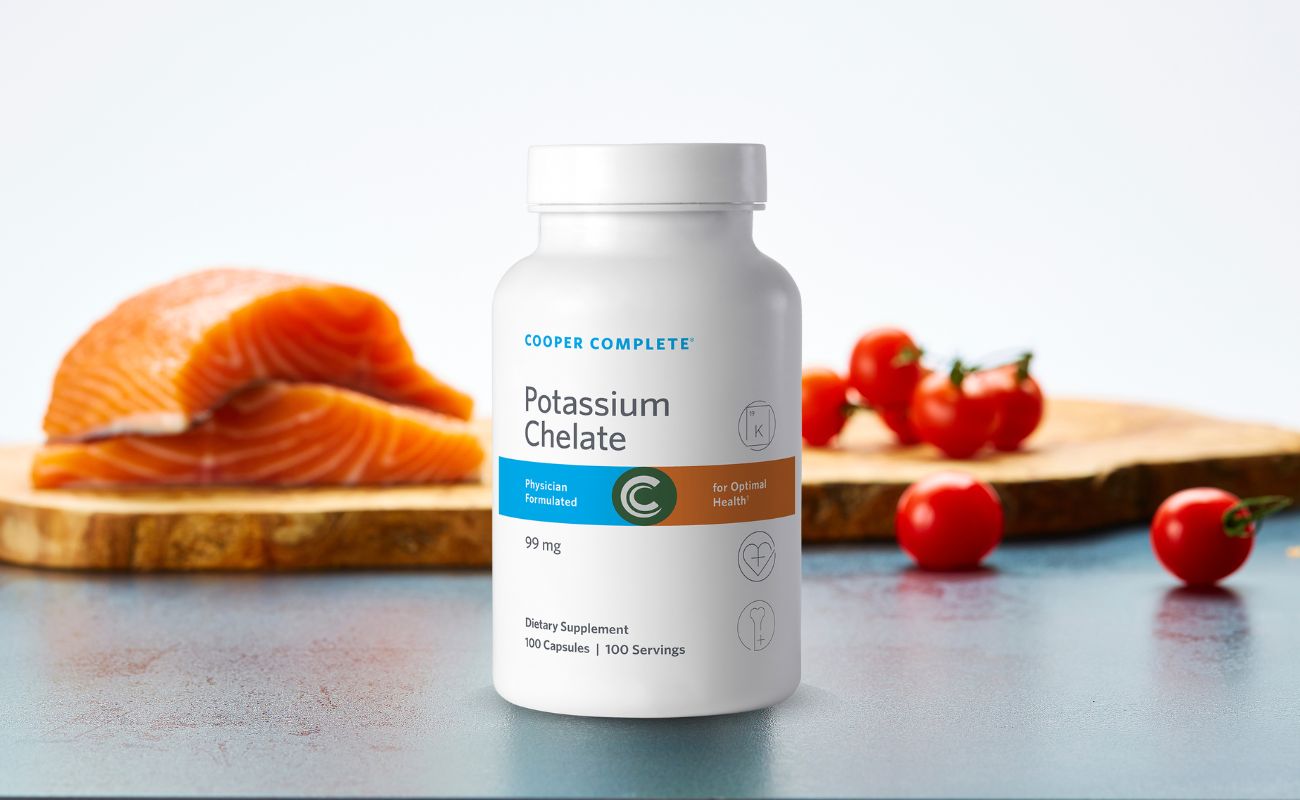
Over the Counter Potassium Chelate Supplement 99 mg
Orders received by noon typically ship same business day. Orders received by noon typically ship same business day.

99 mg Potassium Complex Supplement

Cooper Complete® Potassium Complex Supplement contains 99 mg of potassium to support already normal blood pressure, muscle-skeletal function, and nerve impulses.†

Subscribe and Save!

$15.99

Delivery frequency:

FREE SHIPPING ON 2+ BOTTLES

One-time Purchase

16.48

In stock

Gluten-Free

Potassium Complex Supplement Facts

Serving Size: 1 tablet
Servings Per Container: 100
Ingredients Daily
Amount
% Daily
Value
Potassium (as potassium chloride, potassium gluconate and potassium citrate) 99 mg 2%
Superoxide Dismutase (from vegetable culture**) 15 mg *
Catalase (from vegetable culture**) 15 mg *
*Daily Value not established.

Other ingredients: Cellulose, stearic acid (vegetable source), and magnesium stearate (vegetable source).

**Specially grown, biologically active vegetable culture (from organic peas, lentils and/or chickpeas) containing naturally associated phytochemicals including polyphenolic compounds with SOD and catalase, dehydrated at low temperature to preserve associated enzyme factors.

Gluten-free, Dairy-free, Non-GMO.

Item Number: 303
SKU: 816899000423
Formula: CNN-1705 V0425

What It Is

Cooper Complete®  Potassium Complex Supplement contains 99 mg elemental potassium from an amino acid chelate. The potassium is a blended complex of potassium chloride, potassium gluconate, and potassium citrate.

How to Use:

As a dietary supplement, take one (1) tablet daily or as directed by your health care professional. Each bottle contains 100 tablets.

How It Helps

Potassium Complex supplement contains 99 mg elemental potassium in an easy-to-swallow capsule. Potassium is an essential mineral and electrolyte in all body tissues, necessary for normal cell function. Coffee, tea, milk (dairy and soymilk), and orange juice are top potassium sources in U.S. adults’ diets. In addition to bananas, dried fruits (particularly apricots and prunes), potatoes, lentils and beans are good sources of potassium. Meat, poultry, fish, and nuts also have some potassium. Unfortunately, the average American diet typically contains less potassium than optimal.

Bone Health

Potassium helps neutralize acid load and reduces calcium loss from bone.† Observational studies suggest higher levels of potassium are associated with increased bone mineral density.

Brain Health

Potassium regulates nerve signals and impulse transmission from the brain and the spinal column to the muscles.†

Heart Health

Potassium is key in maintaining normal blood pressure and supporting cardiovascular health.† Potassium is essential for heart muscle contractility and maintaining normal blood pressure.† Potassium helps relax blood vessels. It also helps the kidneys flush excess salt/sodium, which helps maintain normal blood pressure by supporting blood vessel relaxation. Therefore, the body needs more potassium than salt. However, the average American adult consumes 2900 mg of potassium each day and around 3300 mg of sodium. A prospective cohort study of 12,267 US adults looked at all-cause, cardiovascular, and ischemic heart disease mortality and found that people with the highest sodium to potassium ratio doubled their risk of dying of a heart attack compared to people with the lowest ratio.†

Kidney Health

Potassium’s primary role in the body is to help maintain normal cell fluid levels. The extracellular fluid that surrounds cells needs a stable balance of potassium, sodium, and acidity (pH). Potassium alkalinizes urine in the urinary tract.† It also helps the kidneys filter waste and promotes proper fluid balance throughout the body.† The counterpart to potassium, sodium, helps maintain normal fluid levels outside of cells. Potassium lessens the effects of sodium because it helps the kidneys eliminate sodium†.

Muscular Health

Potassium helps muscles contract properly.† Muscle cramps and muscle weakness can occur when potassium levels are low.

This product contains NO gluten, milk or dairy, or genetically modified organisms (GMOs).

As a dietary supplement, adults take one (1) tablet daily or as directed by their health care professional.

Cooper Complete products are verified and lot tested. If you would like a copy of a Certificate of Authenticity or to learn more about our testing process and results, email us at customerservice@coopercomplete.com or call us at 888.393.2221 on weekdays between 9 a.m. and  5 p.m. Central Time (CST).
Complete your Cooper program.

You might be interested in the following Cooper Complete products to support healthy lifestyles.

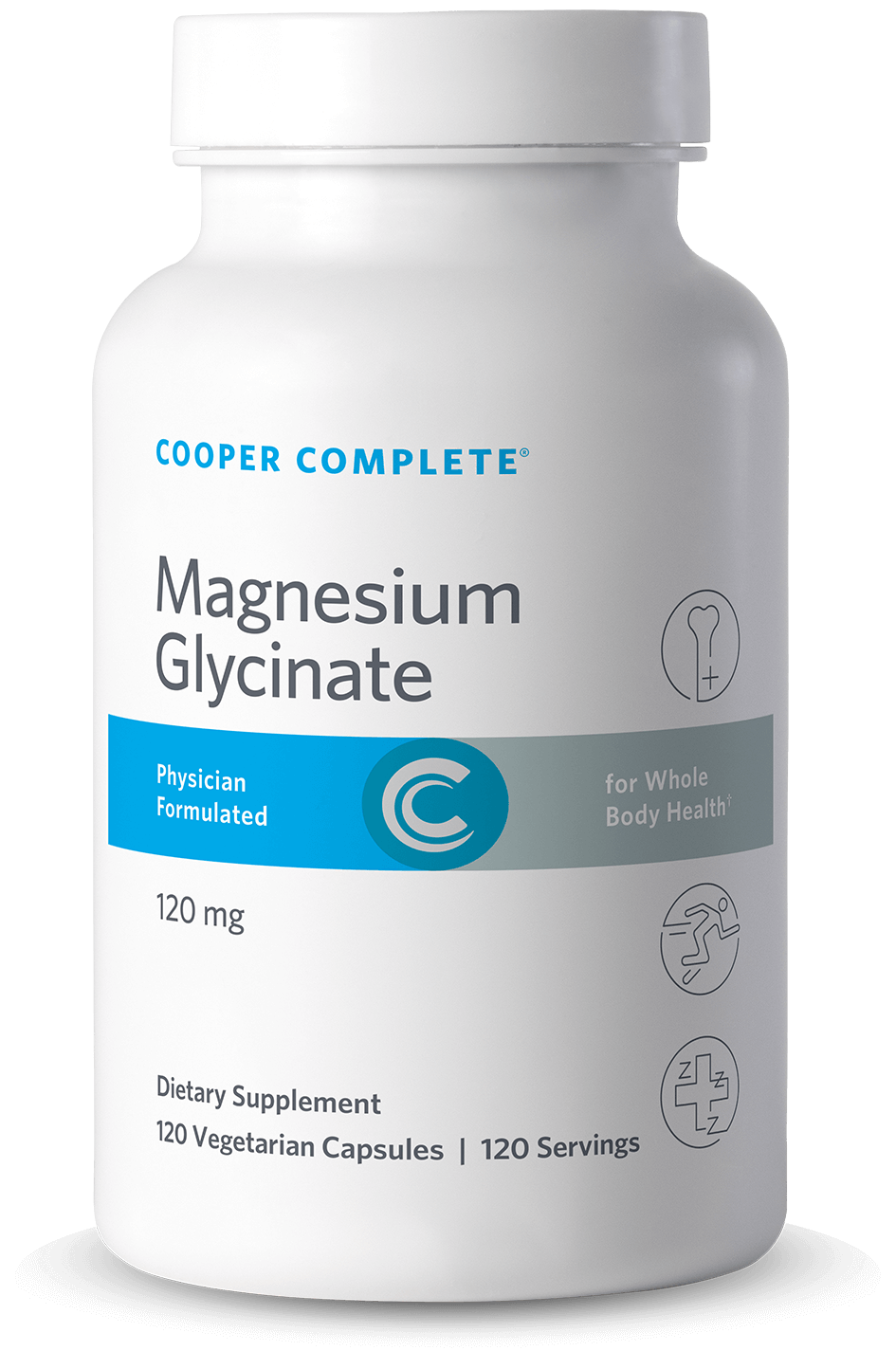
Photo of Cooper Complete 120 mg Magnesium Glycinate Supplement bottle.

120 mg Magnesium Glycinate Supplement

Chelated magnesium glycinate (also known as magnesium bis-glycinate) is well absorbed without significant laxative effects.  

$23.73 Add to cart
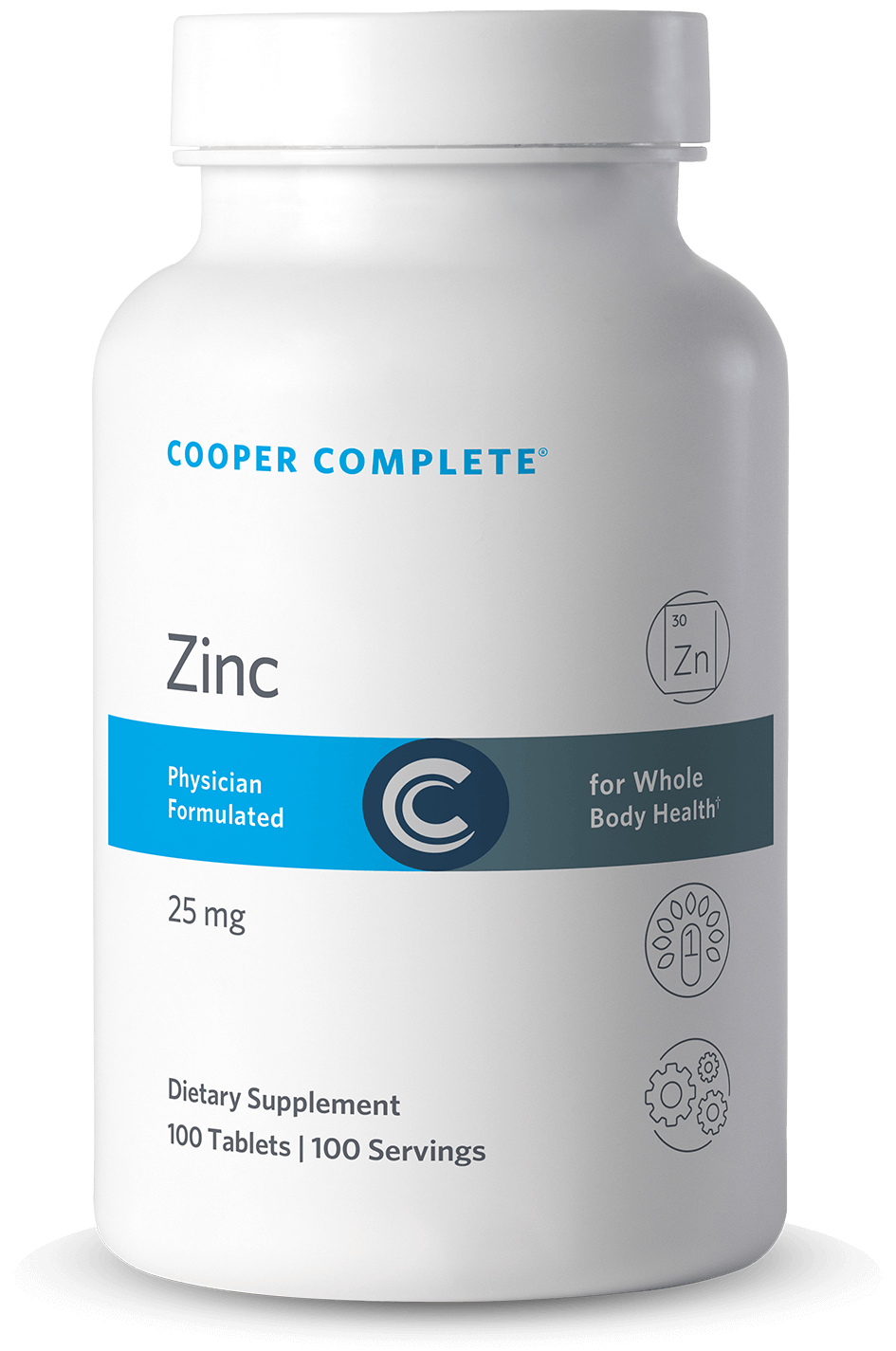
Photo of Cooper Complete Zinc Supplement 25 mg bottle.

Zinc Supplement 25 mg

This Zinc Supplement is comprised of zinc gluconate and zinc citrate for optimal absorption.† Zinc is important for muscle function, healthy aging, skin and immune health.†

$19.83 Add to cart
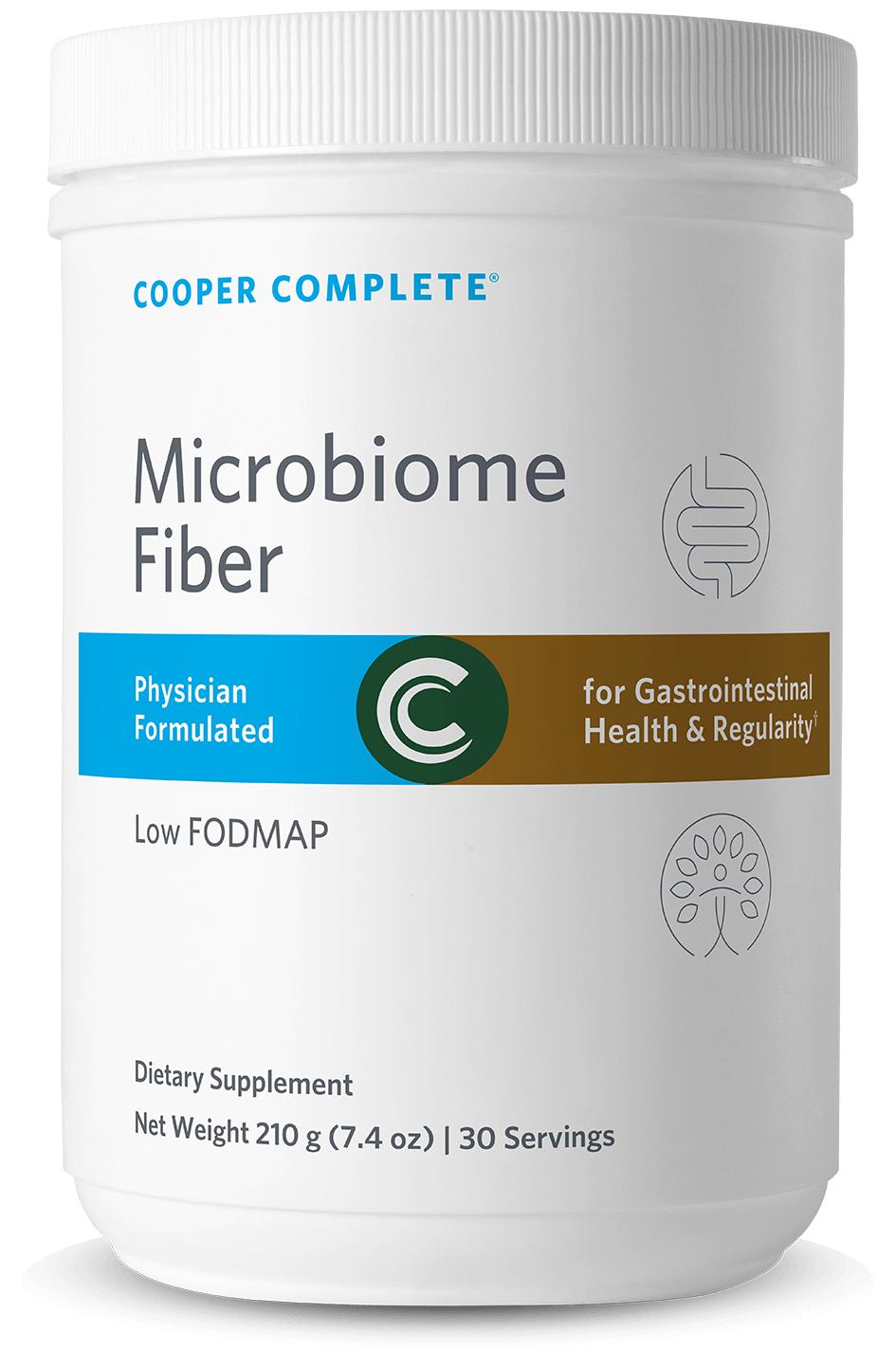
Container of Cooper Complete Microbiome Fiber Dietary Supplement

Microbiome Fiber Supplement

Cooper Complete® Daily Prebiotic Microbiome Fiber supplement contains 6 grams of tasteless and gritless soluble fiber and is low FODMAP to support gastrointestinal health and regularity.†  

$29.57 Add to cart

What Our Customers are Saying

0 out of 5 stars

  • 0 reviews
  • 0 reviews
  • 0 reviews
  • 0 reviews
  • 0 reviews

There are no reviews yet.

Be the first to review “99 mg Potassium Complex Supplement”

Your email address will not be published. Required fields are marked *

Customer Q&As

If you have questions, we have answers. See what real people are asking about Cooper Complete products.

8 Questions
Ask a Question
Q:

What is the best time of day to take a potassium supplement.

A:

Research shows that the best time to take potassium is in the morning, as it helps with electrolyte balance and energy levels.  Take potassium with a full glass of water.

Q:

Will potassium lower my blood pressure?

A:

Potassium plays an important role in maintaining fluid balance and supporting normal blood vessel function, which may help maintain healthy blood pressure levels already within the normal range.† The Centers for Disease Control (CDC) says increasing potassium intake can help decrease your blood pressure if you have high blood pressure†.  For individuals with blood pressure concerns, it’s important to consult a healthcare provider for appropriate treatment and dietary guidance.

Q:

Does potassium reduce calcium loss from bones?

A:

Potassium plays a role in supporting the body’s mineral balance and may help reduce the amount of calcium excreted through urine†.  Observational studies suggest higher levels of potassium are associated with increased bone mineral density.† Maintaining healthy calcium and potassium levels is important for overall bone support.†

Q:

Does potassium help with kidney stones?

A:

Potassium plays a role in maintaining healthy electrolyte balance and supports normal urinary function.† Some research has examined a relationship between dietary potassium intake and overall urinary health.† If you have a history of kidney stones or urinary concerns, speak with your healthcare provider about the best dietary approach for you.

Q:

Does this product contain soy?

A:

No, Cooper Complete Potassium Complex supplement does not contain soy.

Q:

Are there any medications that might interfere with taking a potassium supplement?

A:

Yes. It’s important to talk with your healthcare provider before starting a potassium supplement, especially if you take prescription medications. Certain medications — such as some blood pressure medicines (like ACE inhibitors), potassium-sparing diuretics, or specific antibiotics — may affect how your body handles potassium. Your doctor can help determine if a potassium supplement is appropriate for you.

Q:

Can I take this product if I am also taking Coumadin (warfarin)?

A:

If you are taking Coumadin, we recommend consulting your doctor before adding any supplements to your diet.

Q:

Should Potassium Complex Supplement be taken with or without food?

A:

Potassium Complex can be taken at any time of day that fits your routine.† The most important factor is taking it consistently. Taking it with a meal can help reduce the risk of stomach upset, such as nausea or diarrhea, and support comfortable absorption.†

Find the right supplements, personalized just for you

Live better. Live longer. Take the Cooper Complete vitamin quiz today.

Take the Quiz