Uncover the Scoop on Soluble Psyllium Fiber and How To Take

Psyllium fiber is a soluble fiber that is utilized as an effective low-density lipoprotein (LDL) cholesterol reducer†, laxative, and stool-softening agent in the human body†. As a soluble fiber, psyllium swells as it comes into contact with liquids, creating a gel-like substance that helps move digested particles through the intestines. It is bred by the Plantago ovata herb, also known as P. indica or P. psyllium, and is predominantly found in India.
Psyllium fiber comes from the “husk” or outer coating of psyllium plant seeds. This husk is very effective for lowering total cholesterol† and LDL cholesterol† among individuals who have previously experienced elevated cholesterol levels†.
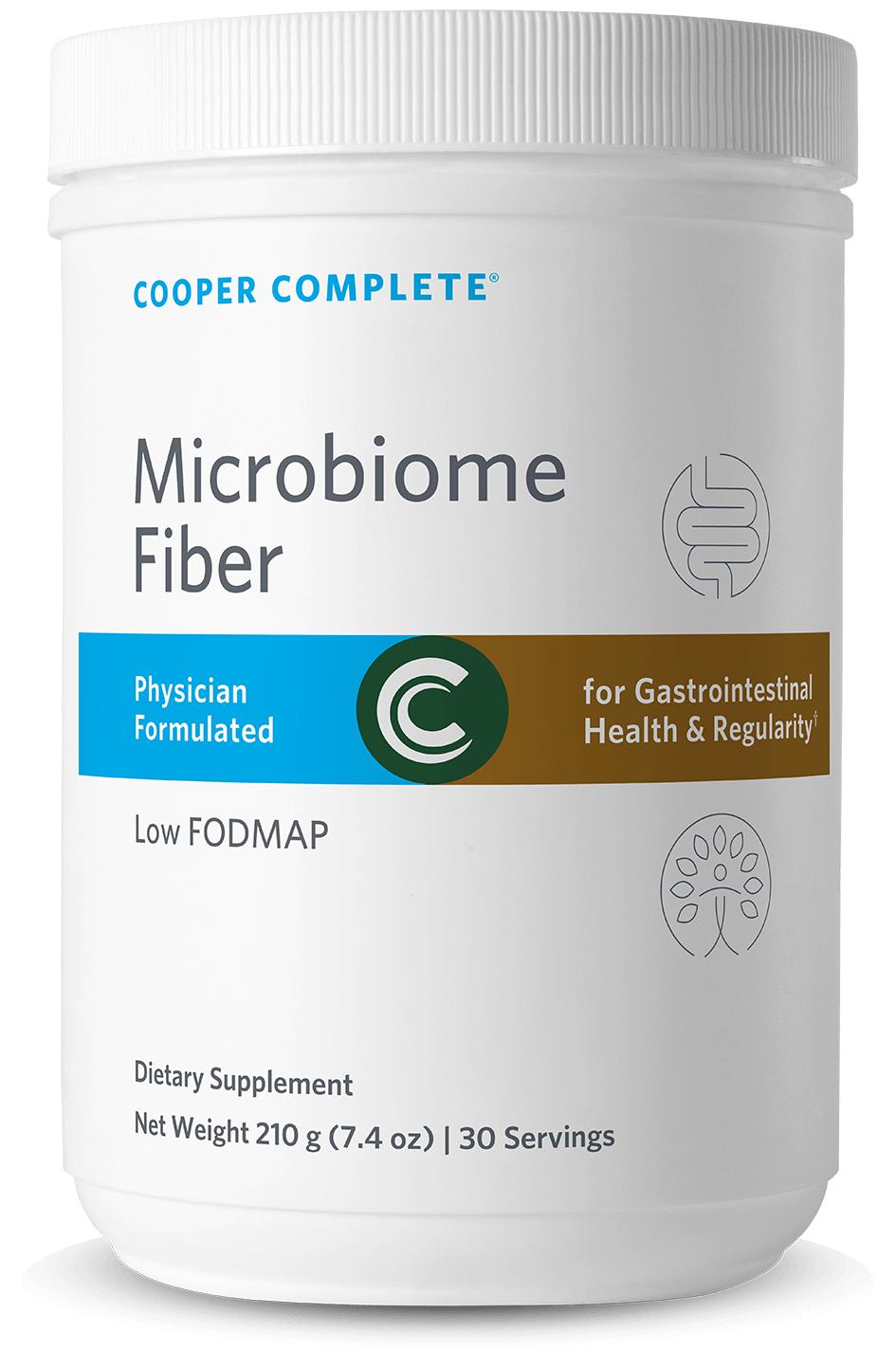
Microbiome Fiber Supplement
Cooper Complete® Daily Prebiotic Microbiome Fiber supplement contains 6 grams of tasteless and gritless soluble fiber and is low FODMAP to support gastrointestinal health and regularity.†
$30.48 Add to cartHow Does Fiber Lower LDL Cholesterol?
Soluble fiber attaches to cholesterol particles in the intestine and prevents them from entering the bloodstream. These particles are then excreted in feces along with the fiber.
What Else Could Psyllium Fiber Be Used For?
Research suggests psyllium husk, which is 70 percent soluble fiber, might also be effective for relieving gastrointestinal issues†, high blood pressure†, diarrhea†, hemorrhoids† and lowering blood sugar after a meal†. The research in this area is inconclusive, and can vary by individual, so talk with your physician or a registered dietitian nutritionist before starting a regimen that includes psyllium husk.
Individuals with diverticulitis may be advised to take Citrucel®, a soluble fiber made from methylcellulose, to help avoid excess gas and gastrointestinal distress. Although methylcellulose is a soluble fiber, it does not help lower cholesterol. If you are looking for fiber products to lower your blood cholesterol†, it is important to make sure the product contains soluble fiber, as insoluble fiber does not lower cholesterol.
Recommended Intake
The National Institute of Health (NIH) reports that individuals who consume approximately “10 to 12 grams [psyllium] daily in combination with a low-fat or high-fat diet, can reduce levels of total cholesterol by three to 14 percent and LDL cholesterol by five to 10 percent in seven weeks or more of treatment.”
The Federal Drug and Food Administration (FDA) recommends consuming at least seven grams of soluble fiber from psyllium husk to reduce an individual’s risk for coronary heart disease. This recommendation refers to soluble fiber from psyllium, not total grams of psyllium, so check product labels carefully to confirm the fiber content.
When starting a fiber supplement, begin with a low dose and gradually increase. For example, mix one-half teaspoon of psyllium husk or powder in six to eight ounces of water in the morning or before bedtime once daily. Add an additional one-half teaspoon per day each week until you reach a total of seven grams of soluble fiber from psyllium husk. Fluid intake, particularly water, is essential as psyllium can thicken quickly in the esophagus and may cause choking if not consumed with sufficient liquid.
Psyllium Fiber Forms
Psyllium is offered in two forms in medications and supplements: seed and husk. While the seed form is typically more expensive, only psyllium husk has been FDA-authorized for cholesterol-lowering benefits. Psyllium husk is also available in powder form.
If you are looking to lower your total cholesterol and LDL†, aim to consume seven grams of soluble fiber from psyllium husk or powder daily. When purchasing psyllium products, check to see if soluble fiber is listed on the product label (bulk products). Once you locate the serving size on the label, look for the number of grams that equals a serving size and multiply that number by 0.7. For example, if a label states that a serving size is “two teaspoons (10 grams),” and psyllium husk is 70 percent soluble fiber, that serving provides 7 grams of soluble fiber (10 x 0.70 = 7 grams).
To incorporate psyllium into your daily routine, begin to add slowly and start with one-half teaspoon per day and increase as tolerated. Drink at least eight ounces of water with every teaspoon of psyllium every day†.
If you are interested in a soluble fiber that does not clump or thicken into a gel-like consistency, consider Microbiome Fiber, which is a soluble fiber made from partially hydrolyzed guar gum. (Learn about the health benefits of Microbiome Fiber†.)